
目次
Dog poop bags with handles are easiest to use when the body is roomy enough for your hand and the empty upper section leaves space to gather and tie the loops. The handles provide a useful grip after pickup, but they do not make an overfilled or damaged bag secure. Open a bag before the walk becomes busy, keep a spare accessible and plan to carry the closed waste to a bin that accepts it.
Try the empty bag with the hand you actually use
At home, open one clean bag and put your pickup hand inside. Your fingers should move comfortably without stretching the mouth tight. Check that there is enough material around your wrist to gather the bag after it is turned back over the contents. A bag can look generous in a flat photograph yet feel cramped when your hand opens inside it.
If you normally wear a glove in cold weather, repeat the empty fit check with that glove. Bulk at the fingertips and wrist can change the fit. Avoid choosing a bag that requires you to remove a glove and rearrange everything while holding a lead. The aim is a routine you can manage calmly with the clothing and equipment you normally use.
Handles add upper material in a different shape from a plain flat top. Check the length and opening of the loops separately from the main body. A long-looking bag may devote a noticeable part of its overall length to handles, leaving less usable depth around the hand and waste. Ask how the listed dimensions are measured if that distinction is unclear.
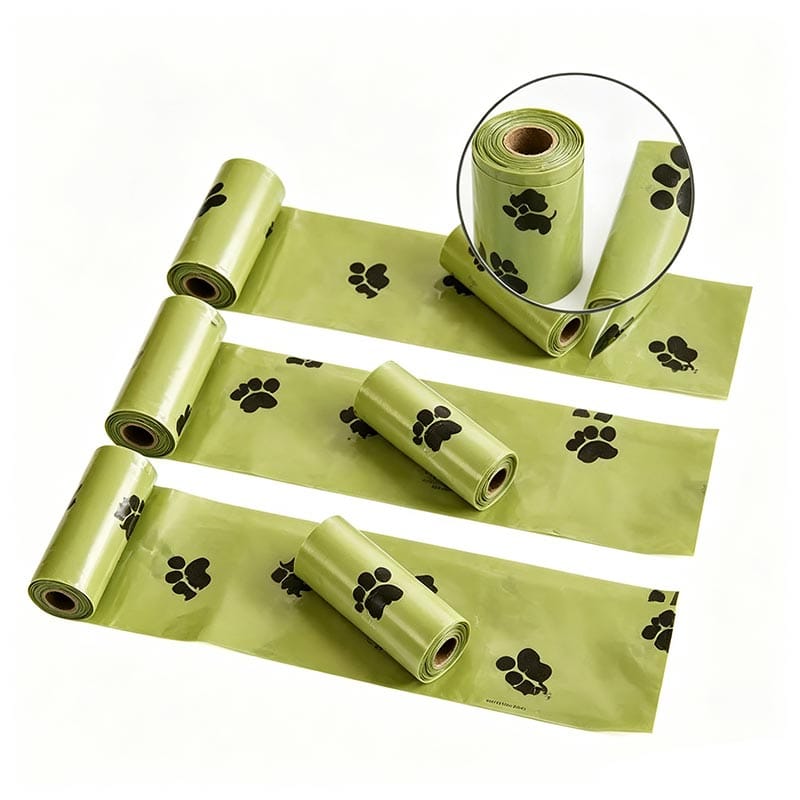
Open one before the distracting part of the walk
Find the mouth while you still have a clean, dry place to stand. Ease the film layers apart near a corner, then open the loops enough to recognise their shape. You can fold the clean empty bag loosely and keep it in an accessible pocket. This small preparation saves the frustrating search for an opening while your dog is moving or another walker needs to pass.
Keep unused bags separate from treats, food and items that need to stay clean. A dispenser or dedicated pocket can make them easier to locate, but a crammed pouch may snag the handle loops. Do not force an entire bundle into a space that twists every bag into a tight knot. Easy access matters more than making the roll or stack look perfectly compact.
In wet or windy weather, separate one bag before leaving a sheltered area. Avoid letting the clean bag blow against the ground while you arrange the lead. Hold its outside edge rather than pushing fingers repeatedly through the opening to find the right side. Preparation should leave the bag clean and easy to use, not create more handling than necessary.
Use the bag body for pickup and the handles for closing
Keep your hand inside the body of the bag during pickup, with enough film extending beyond your wrist. Turn the bag back over its contents carefully so that the outside holding area remains accessible. The handles are useful after the waste is enclosed, but they are not a reason to work with a body that is too small for your hand.
Gather the clean upper film before pulling on the loops. If the contents press directly into the neck, there is not enough free working space. A larger suitable body or less ambitious pickup per bag can make closing easier. Do not squeeze the contents upwards just to make the handles meet; that removes the separation between the grip area and the waste.
If the film catches or tears, stop using that bag as though the handle will compensate. Keep an accessible spare so you can contain the waste appropriately without touching it directly. A handle loop remains only part of a flexible bag. It does not repair a puncture or turn a damaged seam into a reliable closure.
Tie where you still have room to hold the bag
Bring the handles together above the gathered neck and tie them in a secure way suited to the bag design. Leave enough free grip above the closed portion to carry the bag without pressing against its contents. A knot made directly over a crowded body can be difficult to tighten and even more awkward to hold on the rest of the walk.
Before moving on, check visually that the mouth is gathered and the knot is holding. Do not squeeze the bag or swing it to test the closure. A tied handle closure is useful for ordinary carrying but should not be described as airtight or liquid-tight without supporting information. Keep expectations tied to the actual design rather than the reassuring appearance of two loops.
If repeated knotting is difficult, compare the upper shape instead of simply choosing a thicker film. Very short loops, a narrow neck or stiff folds can make the action awkward. A sample opened and tied empty gives a straightforward way to compare the handling. It does not require a technical performance test or an oversized purchase.
Measure the body and handles as separate features
Lay a clean bag flat without stretching it. Record the body width, usable depth to the start of the handles and the overall length. Note any folded sides as well. These measurements explain fit more clearly than a single word such as large, especially when one supplier includes the handles in the stated length and another describes only the body.
Use the same units for the bag and any reference sample. The 長さの単位のNISTガイド provides a clear metric reference if you need to convert centimetres and millimetres. The practical goal is simple: keep a note that you can compare without mistaking a handle dimension for useful bag depth.
A comfortable hand fit is still the final check. A dimension list cannot fully show the way the loops open, how folds sit at the wrist or how easily the upper film gathers. Use the measurements to narrow the options, then check one empty bag in the manner you normally use. Keep the reference for the format that works.
| Feature | Empty-bag check | Why it matters |
|---|---|---|
| Body width | Hand moves without stretching mouth | Comfort during pickup |
| Usable body depth | Film extends beyond wrist | Room to enclose contents |
| Handle loops | Enough clean length for a knot | Manageable closure and grip |

Keep loops away from clips, zips and rough surfaces
Loose handles can catch on lead clips, pocket zips or the edge of a carrying holder. Put clean spare bags where they can be removed without dragging their loops over hardware. For a filled bag, use a secure carrying arrangement that keeps it away from the dog’s movement and from surfaces that could rub or puncture the film.
Do not attach a filled bag where it swings against your leg, a rough fence or the dog’s harness. The handles may make hanging seem convenient, but they do not protect the body from abrasion. If you use a purpose-made carrier, follow its instructions and confirm that the knot or loop is held in the intended way.
After the walk, check reusable carriers or pouches as part of your usual cleaning routine. Keep unused bags clean and dry before restocking. A neatly tied filled bag and a clean supply of spares are separate matters; do not put the remaining unused bags into a pocket that has become dirty simply because everything belongs to the same walking kit.
Plan the bin before the route becomes inconvenient
Use a bin that accepts dog waste under the local rules. A recycling bin, a food-waste caddy or a garden compost pile should not be treated as a default route because the bag looks plant-based or has an environmental phrase on its pack. The accepted disposal route depends on the waste as well as the bag material.
If your route has few bins, plan to carry the closed bag until an accepted one is available. Never leave it beside a path or hang it from a tree with an intention to collect it later. A handled shape makes carrying easier, but it does not make a filled bag appropriate to abandon outdoors. Build the return journey into the walking routine.
Keep disposal instructions simple for anyone else walking the dog. Show them where spare bags are kept and which household bin accepts the tied waste in your area. If a different bag material is introduced, check the route again rather than assuming the old advice transfers. A change in packaging wording does not automatically create a new local collection option.
Choose convenience that helps the whole walk
趙仙 の dog waste bag formats provide options to discuss by shape and handling needs. Ask about the actual handle style and dimensions rather than relying on a product photograph alone. If a standard format feels cramped, describe whether the difficulty is hand entry, usable body depth or the final knot.
A handled bag is useful when it makes a familiar task less fiddly, but it can still be the wrong format for a narrow dispenser or a very small pocket. Compare the whole routine from taking out a bag to reaching the bin. A slightly roomier pocket, a different holder or a flatter bundle may solve the inconvenience without changing every bag feature.
The best result is a bag you can find, open, use and tie without rushing. Keep a spare, leave a clean upper section for closure and carry the waste responsibly. Those habits make more difference to a busy walk than a dramatic strength label or a guess based only on the dog’s size.
Use the form below to describe the flat dimensions, handle style and knotting difficulty you want to improve in a dog waste bag.
Are handled bags only for large dogs?
No. Hand size, pickup method, waste volume and knot space all matter. Dog size alone does not determine the most comfortable bag.
Can I hang a filled bag from an open handle loop?
Close it securely first and use a carrying method that does not snag or swing it against rough surfaces. Follow any holder instructions.
Can handle bags be composted?
Handles say nothing about disposal. Follow the exact bag claim and local accepted-material instructions; do not assume compostability from the shape or colour.
How many spare bags should I carry?
Carry enough for your dog and the walk, with an accessible reserve for an unexpected extra pickup or a damaged bag.
Why are the handles difficult to tie?
The usable neck may be too short or the bag too full. Choose more free upper material instead of pulling a tight knot directly over the contents.