
Table of Contents
Choose a round food container when you want a bowl-like space for spooning, stirring or eating a mixed meal. Choose a rectangular one when a straight-sided footprint fits your lunch bag or fridge shelf more conveniently. Neither shape is automatically more secure, safer to reheat or better for every food. The lid, actual dimensions and meal matter just as much as the outline.
The useful comparison between round vs rectangular food containers starts with an ordinary lunch: where it sits overnight, how it travels and how you eat it. A container that looks neat when empty may be awkward once a tall topping, a spoon and a separate dressing cup join the meal. Work through those moments before choosing a whole stack of matching containers.
Picture the meal at lunchtime, not the empty container
Think of two different lunches. One is a bowl of noodles with toppings that you want to mix together. The other is rice with a side dish that you want to keep in separate areas. A round bowl gives a continuous curve for moving a spoon around. A rectangular container offers corners and a longer direction in which to arrange different parts of a meal.
The outline does not create a sealed division. Sauce can move across either open base, especially when the bag tilts. If keeping foods apart is central to your lunch, look at an appropriate insert tray, separate sauce cup or compartment layout. Changing a single open container from round to rectangular will not solve the same problem on its own.
Also consider how you will eat. A broad opening makes it easier to see and reach the food, while a deep narrow bowl can keep a spoon in a smaller space. A long piece of food may sit more naturally along a rectangular base. These are everyday differences you can judge with a real portion rather than a list of material specifications.

Compare actual footprints on your fridge shelf
Straight-sided rectangles can sit beside each other neatly on a rectangular shelf. This can make the available space easier to use, particularly when you store several lunches at once. However, the external rim, lid tabs and taper still take up room. The stated capacity alone does not show whether two containers will fit beside a milk bottle or beneath the next shelf.
Round bowls leave curved spaces between them when placed side by side. Those spaces may be unimportant if the shelf also holds jars or if you keep only one lunch overnight. A smaller round bowl can fit a particular gap better than a large rectangular box. Measure the actual free shelf space rather than assuming one shape always saves room.
Make a simple paper outline from the top dimensions if you cannot try a sample immediately. Place it where the container will sit and leave room for the lid’s projecting edge. A paper outline does not tell you about height or stability, but it quickly exposes an over-wide bowl or an awkwardly long box. Then check the shelf clearance separately.
Read capacity and height as different pieces of information
Millilitres describe volume. They do not describe the weight of every possible food or the height of a portion. A loose leafy salad, cooked rice and a saucy meal can occupy the same nominal volume in very different ways. The room needed under a lid also depends on whether the food is flat, piled or topped with something fragile.
On Zhaosen’s listed V-Series rectangular range, the main sizes share a 180 by 120 mm top footprint while their heights vary. The listed 400 ml version is 35 mm high, and the 900 ml version is 70 mm high. That is a useful example of how extra capacity can come from depth without changing the main top dimensions. These figures describe that listed series, not every rectangular food container.
The round ranges offer different top diameters as well as different depths. Before choosing, put your usual meal into a suitable clean sample without forcing it flat. Close the matching lid normally. If a topping presses against the lid or food reaches the closure groove, choose a more suitable shape or usable capacity rather than squeezing the lid down.
Follow the container into the lunch bag
Measure the usable bottom of your lunch bag, including any rounded corners or inward-folding lining. A rectangular box can use a flat base neatly, but a long one may have to sit at an angle in a small bag. A round bowl may fit a compact base easily while leaving less room beside it for fruit, cutlery or a drink.
Height can be more limiting than width. A tall bowl may fit the bottom yet prevent the zip from closing once a cooling pack or second item is added. Two shallow rectangular boxes can stack differently from one deep round bowl. Check the complete lunch arrangement, keeping the container upright rather than planning to force it into a gap sideways.
Support the base when moving the filled container. A lid tab is for opening, not a carrying handle. Avoid arranging a heavy bottle where it can press on the lid during the journey. These habits matter for either shape and may prevent more spills than changing the outline of the container.
Look at the lid before calling either shape leak resistant
A round lid follows a continuous rim. A rectangular lid needs to engage around straight sections and corners. Both can work well when the base and lid are designed as a pair and closed correctly. Neither should be described as guaranteed leakproof simply because it is circular or rectangular.
Keep food and sauce out of the closure area and check the whole rim after closing. A corner left slightly raised on a rectangular box can be easy to miss. A round lid can also be partly unseated while looking level from one angle. If a lid needs excessive force or does not fit evenly, recheck that it belongs to that exact base.
Use a brief, normal packing trial with the intended meal and bag. Observe the arrival condition after the journey you actually make. Do not use boiling liquid or deliberate inversion as a casual home test. Where hot or liquid foods are involved, follow the exact product’s use instructions and keep the package supported and upright.
Use a short comparison to choose your next sample
The aim is to narrow the choice to a practical sample rather than declare a universal winner. If both shapes suit the meal, the available shelf and bag space can decide. If your main concern is mixing and spooning, the inside curve and opening size may matter more. If separation is the concern, compare a suitable insert or divided format as well.
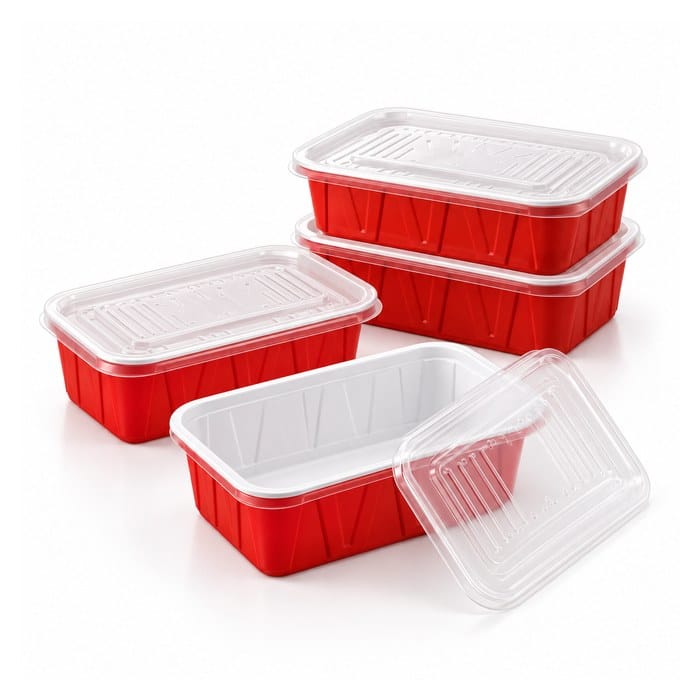
Keep the material and model clear while making that comparison. Zhaosen lists V-Series rectangular PP containers and V-Series round PP containers. Their individual dimensions and lid arrangements provide a more useful comparison than the words round and rectangular on their own.
| Your everyday priority | Round shape can help when | Rectangular shape can help when |
|---|---|---|
| Eating with a spoon | You like a continuous curved bowl interior | You want to reach food arranged along a longer base |
| Shelf arrangement | A bowl fits the actual gap you have | Several straight-sided footprints sit neatly together |
| Tall toppings | The chosen bowl has sufficient depth | A deeper model fits the topping within the available footprint |
| Lunch-bag packing | The bowl fits upright on the bag's base | The box matches the bag's length and width |
| Keeping food apart | A compatible insert or separate cup is available | A suitable divided layout or separate cup is available |
Keep reheating instructions separate from the shape choice
A rectangle is not inherently more suitable for a microwave, and a round bowl is not automatically oven safe. Look at the exact product instructions for both the base and the lid, including whether the lid should be removed or vented. If the instructions are missing or unclear, transfer the meal to a vessel whose intended use you can confirm.
A material name does not supply all those answers. PP means polypropylene, a plastic used in many different products. General background can help you understand the label, but the finished item’s design and stated conditions still govern how it should be used. Do not infer a temperature rating from a recycling code, colour or the feel of a thick wall.
If the capacity label is confusing, the NIST explanation of volume units describes what litres and millilitres measure. Capacity helps compare the space for the meal. It does not establish a heating limit. Shape selection and reheating instructions answer different questions, so keep both clear when choosing a container.
Try three familiar lunches before filling the cupboard
Use the same candidate shape for three meals that represent your routine: perhaps a rice meal, a bowl-style lunch and a bulky salad. Note whether the portion fits without pressing the lid, whether you can reach the food comfortably and whether the packed lunch sits securely in the bag. You may discover that two complementary shapes suit you better than many copies of one.
Check what happens after lunch as well. Can the empty container sit in the bag without the lid coming loose? If the exact product is intended for reuse, follow its cleaning and replacement instructions. Do not assume that a disposable container is suitable for repeated washing simply because it still looks intact. For disposal, use the locally accepted route for the actual material and item.
Choose the smaller set of formats that covers those real meals comfortably. Keep matching lids with their own bases, record the dimensions that work and resist adding capacity that you never use. Round vs rectangular food containers is most useful as a comparison of your daily routine: the right shape fits the food, the shelf, the journey and the way you eat.
Have a meal that is awkward to pack? Share the usual portion, available bag space and whether you need an insert or separate sauce cup through the form below.
Do rectangular containers always save fridge space?
They can sit neatly together on rectangular shelves, but actual rim dimensions and the available gap matter. Check height as well as the footprint.
Are round food containers more leak resistant?
Shape alone does not establish leak resistance. A correctly matched lid, clean rim, suitable filling level and upright handling all matter.
Does a 900ml box hold 900g of any meal?
No. Millilitres measure volume, while grams measure mass. Food density, loose ingredients and necessary headspace change how a portion fits.
Does a rectangular shape keep sauce away from rice?
An open rectangular base has no sealed separation. Consider a suitable compartment, compatible insert or separate sauce cup when separation is needed.
Can I reheat food in either shape?
Only when the exact base and lid instructions permit the intended use. Do not infer heating suitability from shape or a generic material label.