
Table of Contents
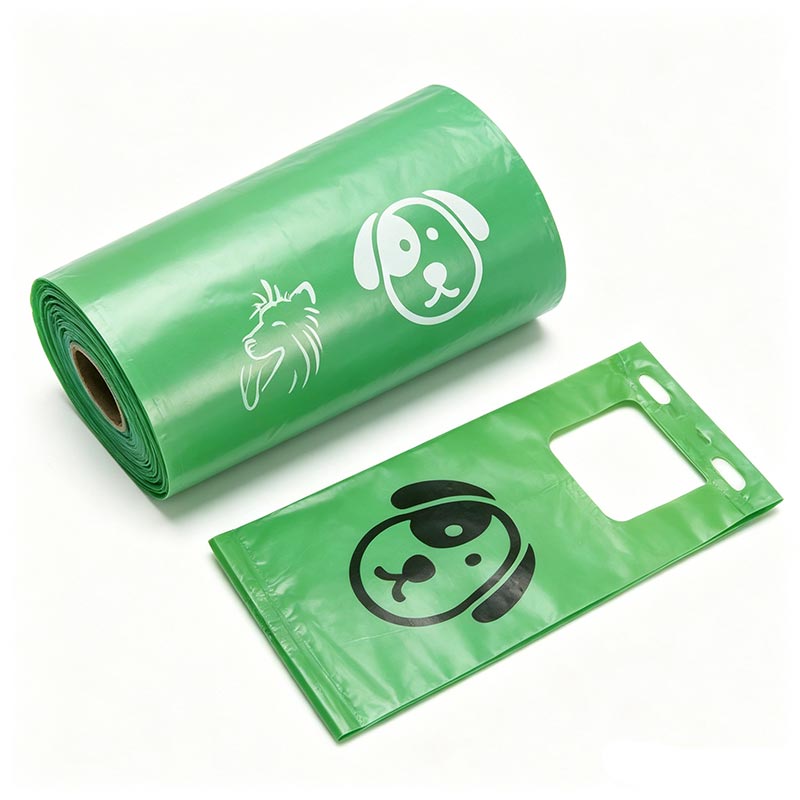
A dog poop bag refill needs to fit the dispenser in three places: across its width, around its outer diameter and at the core or spindle. The bag itself also needs enough width for your hand and enough length to tie after use. A roll can fit perfectly while its bags are awkward to use, so check the roll and the flat bag as two separate items.
If a new refill jams, the problem is often its shape or the way it sits inside the holder. The number of bags on the pack does not tell you whether the roll will turn freely. This guide to dog poop bag roll sizes follows the refill from the unopened pack to the first bag out of the slot, so you can work out what is wrong before buying another large box.
Start with the refill that already works
If you have a reliable refill, save its wrapper or photograph the size details. Take one unused roll out of the pack and measure it before it becomes partly empty. A half-used roll has a smaller outer diameter and can make a tight dispenser look more accommodating than it really is.
Record the roll’s side-to-side width and its diameter across the circular face. Then look at the hole through the middle. Some dispensers have a central peg that needs to pass through that hole. Others simply hold the roll in a hollow body. A paper or plastic core can matter to the first design even when it makes little difference to the second.
Keep the notes with the dispenser’s name or a photo of it. A measurement without a unit is easy to misread later. Millimetres are convenient for these small dimensions, but centimetres work just as well if you use them consistently. The NIST reference on length units is a useful reminder when comparing differently labelled packs.
Open the holder and identify what limits the roll
Look inside the empty dispenser before measuring its outside. A decorative shell can have thick walls, a narrow lid or a central peg that reduces the usable room. The refill has to fit the cavity with the lid properly closed. A roll that sits inside an open holder may become pinched when the cap is screwed on.
For a tube-shaped holder, compare the roll diameter with the narrowest internal opening and the space around the roll. For a hinged or soft case, check how the closure presses on the refill. Side-to-side clearance matters as well: the roll should not be squeezed between the two ends so tightly that it cannot rotate.
Avoid forcing the cap closed to make a refill fit. That can turn a small mismatch into a bag that tears at the exit or a holder that opens during the walk. A refill with fewer bags may have a smaller outer diameter, but bag count is only a clue. Film thickness, folding and winding can also change the finished roll size.
Compare the three roll measurements side by side
Roll width is the distance from one end face to the other. Outer diameter is the distance across the full round face. Core opening is the hole through the centre, where there is one. Measuring these three dimensions removes much of the uncertainty hidden by a claim such as standard refill roll.
A larger core hole does not automatically fix a roll with too much outer diameter. A narrower roll does not solve a spindle that cannot pass through its centre. Treat each contact point separately. You are looking for a roll that fits with enough freedom to turn and feed, rather than a roll that merely fits when pushed into place.
| Measurement | Where to measure | What a mismatch can look like |
|---|---|---|
| Roll width | Between the two flat end faces | The cap squeezes the roll or the roll rubs on both ends |
| Outer diameter | Across the full circular face of an unused roll | The roll catches on the case or will not pass the opening |
| Core opening | Across the central hole | The spindle will not enter or the roll sits badly |
| Flat bag width | Across one open bag laid flat | Your hand feels cramped even though the refill fits |
| Flat bag length | From the bottom seam to the mouth | Too little free material remains for a comfortable knot |
Check the flat bag before choosing the whole pack
Detach one clean, unused bag and open it fully. Lay it flat to see the usable width and length. Side folds or handles can make a folded bag look smaller than it is in use. Equally, a long-looking bag may devote part of its length to handles that do not increase the main pouch depth.
Try putting your hand inside the clean sample in the way you would normally use it. You should have space to move without stretching the opening tight around your knuckles. If you wear gloves on cold walks, repeat the check with those gloves. Comfort depends on your hand and routine as well as the dog’s size.
Think about the free neck or handles that will remain after use. A bag filled almost to its opening leaves very little material to gather and tie. Choosing extra length for a manageable closure can be more useful than focusing only on thickness. Zhaosen’s pet waste bag range includes several bag and feed formats, so the roll format should be checked against the intended holder.
Load one roll and follow the first bag through the slot
Remove only the outer securing label or wrap that is meant to come off. Keep the remaining roll together, find the leading edge and feed it through the exit in the holder’s intended direction. If the dispenser has an instruction diagram, follow it. A roll loaded backwards may rub or unwind awkwardly even when its dimensions are suitable.
Close the holder fully, then pull out enough material to find the first perforation. Support the roll or the next bag if the design allows, and separate the bag at the line rather than pulling against the entire case. The first bag may feel different if a securing label overlaps it, so inspect it for damage before using it.
Now feed a second bag. You are checking whether the new full roll turns normally, whether the exit catches the film and whether a useful leading edge remains outside. Do this at home with clean bags. A first-use check beside the door is much easier than discovering a jam while holding a lead in the rain.
Use the point of resistance to find a jam
If the roll stops as soon as the cap closes, inspect the side clearance and outer diameter. If it turns freely with the cap open but hardly moves when closed, the closure may be pressing on it. Replacing the roll with a narrower or smaller suitable refill is more sensible than repeatedly pulling harder.
If the roll turns but the film catches at the exit, inspect the slot and the path of the leading bag. A twisted strip or a rough edge can concentrate the pulling force in one small area. Remove loose packaging scraps and refit the leading edge. A damaged holder or one with a sharp exit should be replaced rather than used to judge every refill.
If several bags unravel together, check the roll direction and whether the next bag is held when you tear at the perforation. A loose case may offer little resistance, while a very tight case offers too much. Core dimensions, winding and dispenser design work together. There is no universal roll measurement that guarantees trouble-free feeding in every holder.
Choose a different format when the holder is the awkward part
A roll dispenser is convenient when it feeds cleanly and clips where you want it. It is not the only way to carry bags. A small pocket pouch can hold folded individual bags, and a pad-bound format can suit a fixed station near a door. Handle-tie bags may be useful when easy closing matters more to you than the smallest refill shape.
Do not try to fit a pad-bound or individually folded product into a holder made for cored rolls just because the pack says pet waste bags. The website lists individual vest-style bags, pad-bound bags, folded continuous-feed formats and cored roll options. Those descriptions identify different formats rather than interchangeable refills.
For a shared park station, compatibility includes how a bag is presented at the opening and how users take one sheet at a time. For a personal dispenser, it includes the clip, cap and space inside the body. Start with the real holder and walking routine rather than choosing a format only from its appearance in a product picture.

Keep a useful spare without losing track of the size
Store refill rolls in a dry place away from direct heat and accidental damage. Keep the pack label with the remaining rolls so the dimensions and count stay attached to the product. A roll left loose among keys or sharp pocket items can be damaged before it ever reaches the dispenser.
Check the holder before leaving home and carry a spare clean bag in an accessible pocket. The spare avoids relying on a single refill’s remaining count, especially if the last few bags are hard to see. Replace any bag that appears split or damaged. Follow the local rules for placing collected pet waste in an accepted bin.
Once you have recorded a working roll width, outer diameter, core opening and flat bag size, future purchases become much easier. You can compare a new refill against those notes and test one roll before choosing a multipack. If you need a different format, share the holder measurements and preferred bag style through Zhaosen’s custom packaging page rather than relying on the phrase standard size.
Need help identifying a suitable refill format? Use the form below to share the dispenser’s usable space, spindle dimensions and preferred flat bag size.
Are all dog poop bag refill rolls the same size?
No. Roll width, outer diameter, core opening and flat bag dimensions can vary. Compare these with your actual dispenser.
Does the number of bags tell me the roll diameter?
No. Count is only one factor. Film thickness, folding, winding and core dimensions also affect the finished roll.
Why does a refill jam only after I close the dispenser?
The cap or case may squeeze the full roll. Check side clearance, outer diameter and the way the roll sits on the spindle.
Can a refill fit while the bags are too small for me?
Yes. A compact roll can contain narrow or short bags. Open a clean sample and check hand space and free material for tying.
Should I choose handled bags for a roll dispenser?
Only if that handled roll format fits the holder. Individual handle-tie bags and cored refill rolls are different formats.